


A 60-Year Legacy of Improving Lives for Children and Families
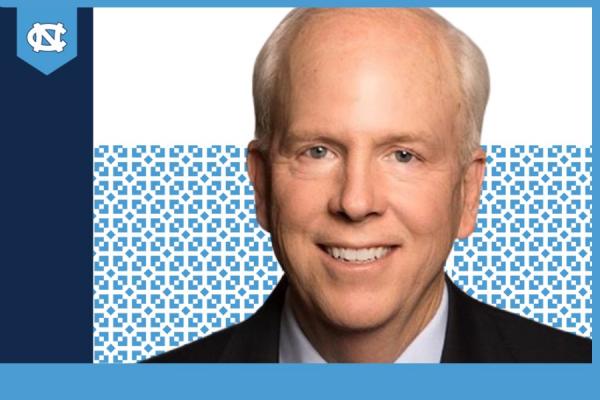
When former Director Don Bailey, PhD, reflects on the history of the UNC Frank Porter Graham Child Development Institute (FPG), he begins not with a single study, program, or milestone, but with a moment in time.
FPG was born in the 1960s, a period marked by social change, public unrest, and a growing national awareness of the needs of children from low-income communities as well as children and families affected by disabilities. For Bailey, that context is essential to understanding the Institute’s purpose from the beginning.
“The [Institute] was born out of that confluence of two important needs,” Bailey said. “How can we make lives for children and make lives for people with disabilities better?”
Landmark research with lasting impact
Any account of FPG’s history, Bailey said, must include the Abecedarian Project, the landmark longitudinal study that helped demonstrate the power of high-quality early care and education for children from low-income families. Launched in 1972, the study followed children from infancy into adulthood, producing evidence that early educational experiences can have profound and sustained effects across the life course.
For Bailey, the Abecedarian Project remains one of FPG’s most important contributions to the field because it moved the conversation beyond whether early childhood education matters and toward a deeper understanding of what high-quality early learning can make possible.
“The data showed huge differences, huge effects very early in life,” Bailey said. “The most remarkable thing about the project is it has continued to show benefit even into adulthood—a remarkable testament to the importance of high-quality early care.”
A deepening commitment to children with disabilities
Another defining moment came in the mid-1980s, when children with disabilities began enrolling in the UNC Frank Porter Graham Child Care Center. Until then, Bailey noted, the center had focused largely on children considered at risk for educational failure. The shift to inclusive classrooms represented a major expansion of FPG’s work and identity.
Bringing children with disabilities into classrooms with other children helped establish a long-term focus on disability that has continued to shape the Institute’s research, technical assistance, professional development, and systems-change work.
“This was a big change,” Bailey said. “It really led to a long-term focus on disability that has continued to characterize [FPG] throughout its existence.”
From North Carolina to national leadership
Over time, FPG’s influence expanded well beyond Chapel Hill. Bailey points to the National Center for Early Development and Learning as a pivotal grant that placed FPG on the national stage in early care and education. The work focused heavily on quality, reinforcing a central lesson from earlier studies: Environments matter, but the quality of those environments is what makes the difference for children and families.
FPG also helped shape early childhood policy and practice in North Carolina through its work with Smart Start, the statewide initiative launched by Governor Jim Hunt to help children enter school healthy and ready to succeed. FPG investigators contributed to the design and structure of the initiative and played an important role in evaluating its benefits and limitations.
That evaluation role, Bailey said, was important not only because it increased FPG’s visibility, but because it required the Institute to bring rigor, objectivity, and honesty to a high-profile public investment in young children.
Supporting the people who support children
Across six decades, Bailey sees another thread running through FPG’s work: a sustained commitment to professional development and to the people who care for and serve children and families every day.
That commitment has taken many forms, from improving the quality of child care classrooms and supporting teachers in early learning settings to helping states and national systems strengthen services for children and families. Over the years, FPG has developed training programs and support systems for professionals across disciplines, always with an eye toward translating research into real-world practice.
“It shows a real commitment to making a difference in the people who spend day in and day out taking care of children,” Bailey said.
A legacy rooted in purpose
As FPG celebrates its 60th anniversary, Bailey’s reflection underscores the Institute’s enduring identity: a place where research, practice, policy, and public service come together to improve lives. From the Abecedarian Project to inclusive early childhood classrooms, from Smart Start to national centers focused on quality, implementation, and systems change, FPG’s history is marked by a willingness to ask significant questions and follow the evidence wherever it leads.
For Bailey, the Institute’s legacy is not only the knowledge it has produced, but the lives and systems it has helped change. Six decades after its founding, FPG continues to build on that legacy by advancing research and practice that support children, families, educators, and communities in North Carolina, across the nation, and around the world.


