


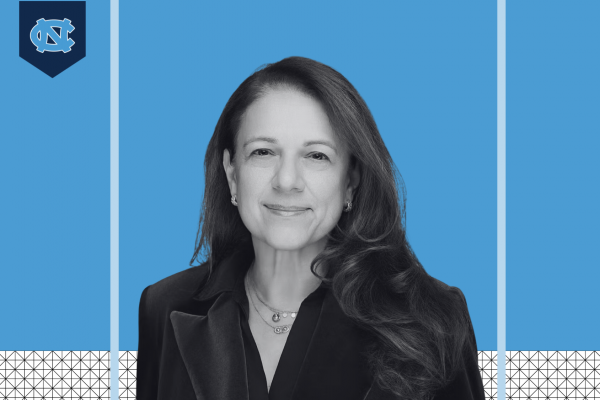
FPG Celebrates 60 years, reflections from Ayse Belger
To help celebrate the 60th anniversary of the UNC Frank Porter Graham Child Development Institute (FPG), we’ve been creating special content to highlight FPG’s history, its people, and their incredible work over the past six decades. A series of interviews with four former directors and our current director focus on what leading the Institute has meant to each of them.
In this installment, we hear from Ayse Belger, PhD, a professor and director of neuroimaging research in UNC's Department of Psychiatry, who was FPG’s director from 2018 until 2023.
What did it mean to you, as a researcher and an academician, to serve as FPG's director?
It truly was a privilege to serve as the director of the Frank Porter Graham Child Development Institute for five years. To me, directing this amazing, forward-looking Institute that bridges across disciplines was really an opportunity to grow not only my research but also to transform our field.
The work that we do [at the Institute] really connects the critical areas of work, from education to health, areas that all impact children's development. And this integrative model, in my opinion, is the model that will inform our next generation of studies and research on child health and development and child education. FPG provides an opportunity to bring together scientists from different disciplines to interact. And for me, for example, as a cognitive neuroscientist, it was truly a unique opportunity to get to learn from and collaborate with scientists in adjacent transactional and transdisciplinary areas that transect in some ways, with the work that I do. They are very complementary, and they inform the work that I do, but at the same time, those are not the questions that I ask every day in the lab. And I think that's true for everyone at the institute. So, together we really complete each other's work.
It was also very special to be able to connect with our community and with policymakers, and with areas where we can take our research that generates evidence-based practices and translates them into policies. The dissemination aspect of the work at FPG is really critical and unique.
Work at FPG is also crucial because it aims at improving outcomes for all children, especially children with different learning abilities. Children with chronic illnesses. Children who are oftentimes misunderstood and who receive relatively small amounts of services and live in low resource areas. By understanding the unique needs and strengths of children with special needs and children with different developmental abilities and profiles, FPG really allows all children to thrive given their circumstances, their communities, their environments.
From your perspective as a former FPG director, what are your hopes for the Institute in the next 60 years?
That's a great question. And I want to say why that's such a great question. Sixty years seems like a long time away, but children of today—how they grow today and what they have access to today will determine their health, well-being, and job security in the next 60 years ...
So I think [that the Institute] needs to be focusing on or continuing to focus on the translational work that FPG does. There is a critical gap in implementation. There is a critical gap in translating evidence-based practices into policies. And the reason why this is so important is because a lot of the shortcomings of our children's health and well-being arise from an inability to access resources. This problem of equity can best be addressed by working at the evidence-to-policy translation level, so that we can then distribute this wealth of scientific evidence that we are generating at the Institute to all communities and allow all children and families access to those rich, evidence-based practices and resources.


