


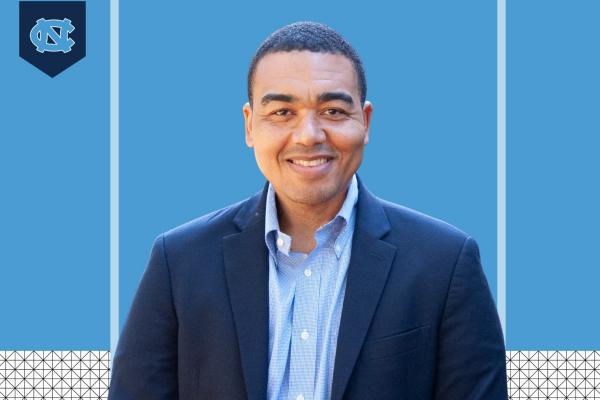
FPG Celebrates 60 years, reflections from Brian Boyd
To help celebrate the 60th anniversary of the UNC Frank Porter Graham Child Development Institute (FPG), we’ve been creating special content to highlight FPG’s history, its people, and their incredible work over the past six decades. A series of interviews with four former directors and our current director focus on what leading the Institute has meant to each of them.
In this installment, we hear from Brian Boyd, PhD, the William C. Friday Distinguished Professor of Education in the School of Education and Director of FPG.
Throughout his career, Boyd has focused his research on improving outcomes for children and families. His work involves the most vulnerable, and often marginalized, populations. Trained as a special educator, he has led work on evidence-based practices for use in schools and homes, while more recent studies have examined how implicit bias and race shape outcomes for children with and without disabilities.
Boyd also serves as president of the International Society for Autism Research (INSAR) and contributes to national boards committed to advancing outcomes for autistic people and historically underserved communities.
What does serving as FPG’s director mean to you as a researcher and academician?
It means a lot to me as a researcher and someone in the academy to serve as FPG’s director because it's surreal for me in a lot of ways. I really started my career at FPG. Right after I completed my postdoc in the School of Medicine, my first faculty position was as an investigator at FPG. The former director, Sam Odom, was able to negotiate a position for me as part of his starting as director, and that sort of initial position serving as an FPG investigator allowed me to get some of the first grants I would ever get as part of my career. And it really launched my research career, my research trajectory.
It's also surreal because I'm now the director of a place where I read so many of the research articles by people who used to work here. And it's led to so many collaborative opportunities as a result. So, in so many ways, it's a full circle moment to have started my career here and more than 20 years later, to end up as the director of the Institute.
If you could only share one thing about FPG, what would you tell someone?
If I could share one thing about FPG, what I would tell people is that we are— that people who work here are not just guided by research for the sake of research, they are guided by using that research to improve the lives of children and families. It's a grounded research. It's a research that is done by a research community where people wake up every day thinking, “How can they make things better for others?”
I think FPG puts the “applied” in applied research. And, you know, there isn't a better place to work if you are interested in doing work for the betterment of society. I think about the kinds of research questions people are asking, the kinds of projects they're doing, the communities that they're trying to engage. Those communities who are often excluded, who are often marginalized, who have often been left behind.
Those are the people that the researchers who work here and the technical assistance specialists and implementation scientists are focused on. And so that's what I want to share about FPG, is that it's not just a research center. It's a center really focused on doing quality work that ultimately improves children's and families’ lives.
What are your hopes for FPG for the next 60 years?
What are my hopes for the next 60 years of FPG? Well, given our current environment, I hope that we continue to receive funding to do the work we would like to do.
But beyond that hope around funding and that we are able to do that kind of work, I hope FPG really begins to think more about how it impacts what's happening in the state, and to improve the lives of people within North Carolina, but also continues to do the work around the country and around the world.
My hope is that we will continue to grow in size, grow in the breadth of the research we're trying to do, to improve children's lives, that we will grow our connections to important and relevant organizations who are doing similar work, and also grow and strengthen our connections to each other. I think all of those things will position us to be the best, child development research center, really, in the country in particular and, potentially, around the world.


