


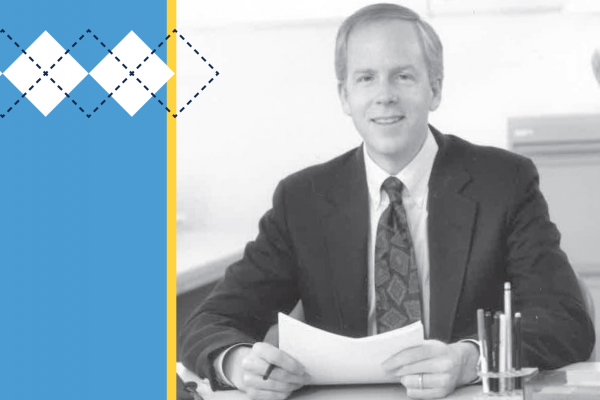
FPG Celebrates 60 years, reflections from Don Bailey
To help celebrate the 60th anniversary of the UNC Frank Porter Graham Child Development Institute (FPG), we’ve been creating special content to highlight FPG’s history, its people, and their incredible work over the past six decades. A series of interviews with four former directors and our current director focus on what leading the Institute has meant to each of them.
In this installment, we hear from Don Bailey, PhD, who is internationally known as an expert on young children with disabilities. Bailey served on the faculty of The University of North Carolina at Chapel Hill for 27 years where he was a William R. Kenan, Jr. Distinguished Professor and was for 14 years—from 1992 until 2006—director of FPG. His research has addressed issues related to newborn screening, early identification and early intervention for children with disabilities, as well as family adaptation to disability.
What did it mean to you to serve as FPG’s director?
Serving as the director was really the biggest honor of my career. It was just such a wonderful opportunity to do so many things. At first, it was daunting, you know. I was young, I was head of a large research institute and had followed a number of very prominent individuals who had set a very high standard for leadership. I learned a lot as director. I learned a lot about myself. I learned about leadership and what that meant, and I learned about how to set a strategic vision for an organization. I especially learned about working with so many different people with different interests and expertise, and abilities and personalities—a fantastic opportunity. And with such engaged and committed individuals. It was really important for me to balance management and leadership with my own research. And so, over the years, I tried to do what I felt all investigators at FPG should be doing, which is high quality research that makes a difference.
If you could only share one thing about FPG with someone, what would you tell them?
FPG is committed to the whole child—the child as an individual, the child as a member of the family, the child as a member of society. And FPG over the years has been just laser focused on quality. What does it mean to have a quality experience for all children, for all families, and for the professionals who work with children and families? Laser focused on quality.
From your perspective as a former FPG director, what are your hopes for FPG for the next 60 years?
FPG needs to be known as a leading voice speaking out for children and for families. We need to be known for objectivity in our research and for rigor. We always want people to believe what FPG says and be inspired by it. We want to focus on impact. Everything that FPG does should ultimately lead to impact for children, for families, and for society.


