


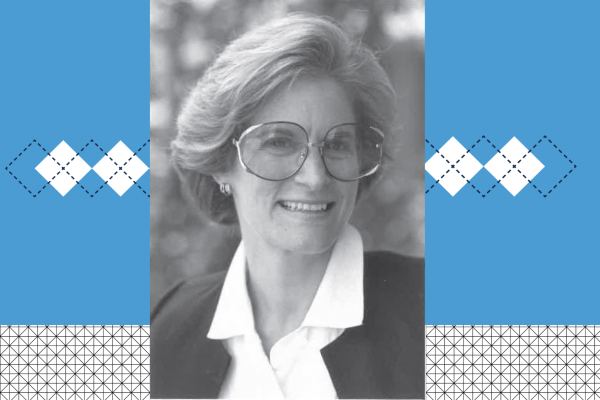
FPG Celebrates 60 years, reflections from Sharon Landesman
To help celebrate the 60th anniversary of the UNC Frank Porter Graham Child Development Institute (FPG), we’ve been creating special content to highlight FPG’s history, its people, and their incredible work over the past six decades. A series of interviews with four former directors and our current director focus on what leading the Institute has meant to each of them.
In this installment, we hear from Sharon Landesman Ramey, PhD, Distinguished Scholar and Professor, Fralin Biomedical Research Institute, Departments of Psychology, Neuroscience, and Human Development, Virginia Tech, who was FPG’s director from 1987 until 1990.
What did it mean to you as a researcher and an academician to serve as FPG's director?
When I became Director of FPG in 1987, it was a pivotal time that led to securing and expanding our NIH multidisciplinary center funding - and sought to strengthen the relationship with main campus and other universities, including launching the Carolina Consortium on Human Development. I was honored to be director and to bring the research mission forward, emphasizing longitudinal research and randomized clinical trials.
I was honored to be director and to bring the research mission forward, emphasizing longitudinal research and randomized clinical trials.
FPG is often known for the Abecedarian Project, our work in technical assistance, and our autism and our developmental disabilities research. If you could only share one thing about FPG, what would you share or tell someone?
For me, the Abecedarian Project, designed and led by Dr. Craig Ramey, has been an exemplary clinical trial—demonstrating short-and long-term benefits of theory-driven early care and education, with unexpected health benefits and improved quality of life, along with evidence of positive brain development. This model included a commitment to replication of findings (Project CARE), adaptation to new clinical populations (low birthweight premature children in the 8-site Infant Health and Development Program), providing data for others to estimate return-on-investment from the Abecedarian Project, and technical assistance and policy engagement. I had the chance to join in—and later continue with these activities—for many decades, even after Craig and I left FPG officially. We were able to stay connected in measurable ways and in scientific spirit.
From your perspective as a former FPG director, what are your hopes for the Institute in the next 60 years?
My hopes for FPG are the same as for any university-based inter- and multi-disciplinary research center—to stay grounded in the commitment to rigorous science, first and foremost, and to remember that what we now label as “Implementation Science” and “Translational Science” were always part of the FPG tradition, from the very beginning.


