


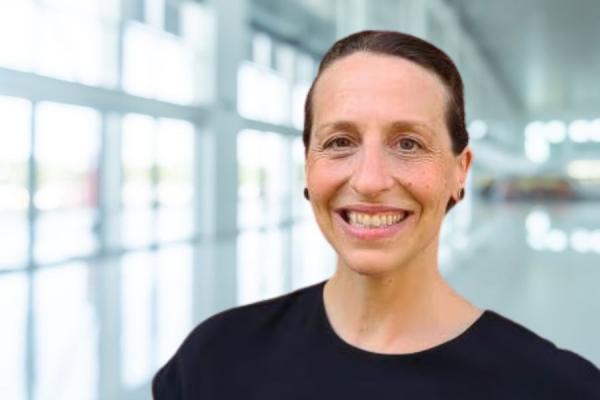
FPG Faculty Fellow: Helen Rose Miesner
Helen Rose Miesner is a research assistant professor in Public Policy at the Education Policy Initiative at Carolina (EPIC). She is also a faculty fellow at the UNC Frank Porter Graham Child Development Institute (FPG). Miesner applies a sociocultural lens to analyze how federal, state, and local education policies play out in practice. Her work further attends to how practitioners across contexts differently enact education policies.
As part of our FPG faculty fellow profile series, we recently spoke with Miesner to learn about her professional journey, what keeps her motivated, and what being a faculty fellow at FPG means to her. Here’s what she had to say.
Tell us about your professional journey—what led you to the work you do?
I began teaching elementary special education upon moving to Wisconsin from New York. Between staff absences, changes of plans from classroom teachers, and my shifting roster of students, it felt impossible to meet the teaching and compliance responsibilities of my role. Further, the resources available in the suburban Title I elementary school where I taught diverged largely from those of the urban private schools in which I previously worked and the rural public school I had personally attended. My teaching experiences compelled me to examine how educational policies intersected with the everyday realities of schools as well as how these intersections varied across school contexts.
What are you working on right now?
I’m embarking on a large study with colleagues at EPIC and FPG to examine how special educator teacher working conditions in North Carolina relate to teacher and student outcomes. Recent iterations of the North Carolina Teacher Working Conditions Survey allow us to disaggregate staff perceptions of school working conditions by role, which can help us better understand how special education teachers differently experience their school contexts relative to their general education colleagues. We’ll also be conducting interviews with more than 100 practitioners across the state to understand how districts can support special education teachers and students with disabilities.
Additionally, I’m working on several projects that highlight how practitioners in different settings enact education policies. I’m currently wrapping up a Spencer-funded project on how school staff manage the restrictive demands of North Carolina’s SB49 and how they perceive this legislation as impacting LGBTQ+ students. Recently, I’ve also worked with EPIC colleagues to examine how practitioners differently approach practices related to student attendance.
What keeps you motivated in your work?
Every child deserves access to a quality public education. Full stop. Yet, despite our country’s wealth, we see teaching deprofessionalized and students inadequately supported. I do not accept this.
What do you find most challenging about your work?
I’m constantly grappling with the tension between practitioner agency and the contexts that delimit practitioners’ work. It’s a blurry, moving line, and it’s different in every case. While this dynamic keeps things interesting, it also makes it difficult to develop tidy recommendations.
What do you most enjoy about your work?
As a research professor, I get to learn from so many people! In addition to my colleagues in academia, I work with policymakers in state government, officers at the North Carolina Department of Public Instruction, practitioners in schools, students, and family members. Connecting with folks across communities and hearing their array of personal insights is the absolute coolest.
What does being an FPG faculty fellow mean to you?
As an FPG faculty fellow, I aim to contribute to community-informed projects and to minimize the persistent gap between research and practice. I am eager to learn from the myriad experienced scholars at FPG, and I especially value the multi-disciplinary network of scholarship fostered by the Institute.


