


FPG researchers share reflections from international early childhood quality conference
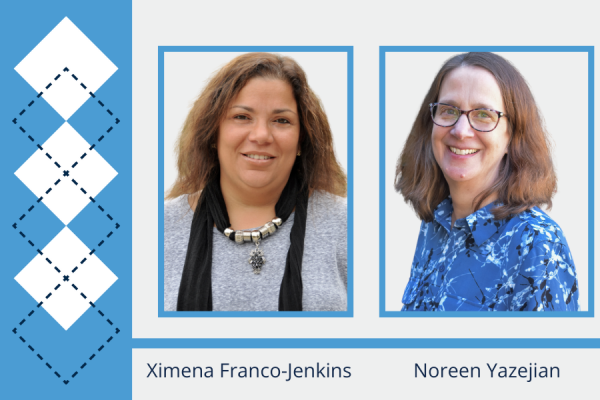
Earlier this year, the UNC Frank Porter Graham Child Development Institute (FPG) announced Ximena Franco-Jenkins, PhD, senior research scientist at FPG, and Noreen Yazejian, PhD, FPG associate director for research and senior research scientist, as recipients of the 2026 Thelma Harms Early Childhood Education Award. Named for Thelma Harms, PhD, FPG director of curriculum development emerita, the award supports international work to advance the understanding and improvement of early childhood program quality.
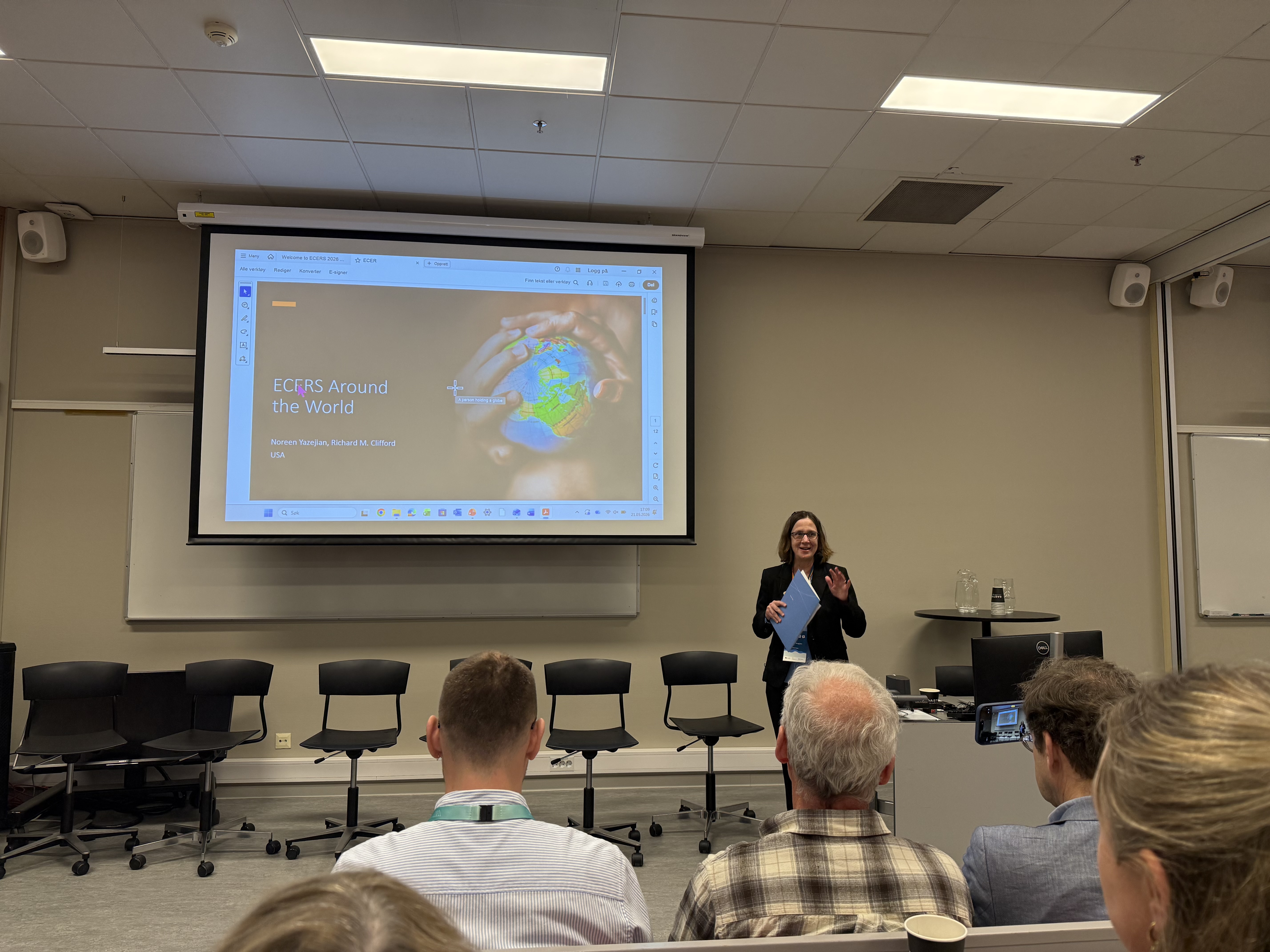
Franco-Jenkins and Yazejian used the award to attend the 2026 International ECERS Meeting in May at Oslo Metropolitan University in Norway. There, they joined researchers from around the world to share ideas, present their work, and reflect on how early childhood quality is shaped by language, culture, and community context.
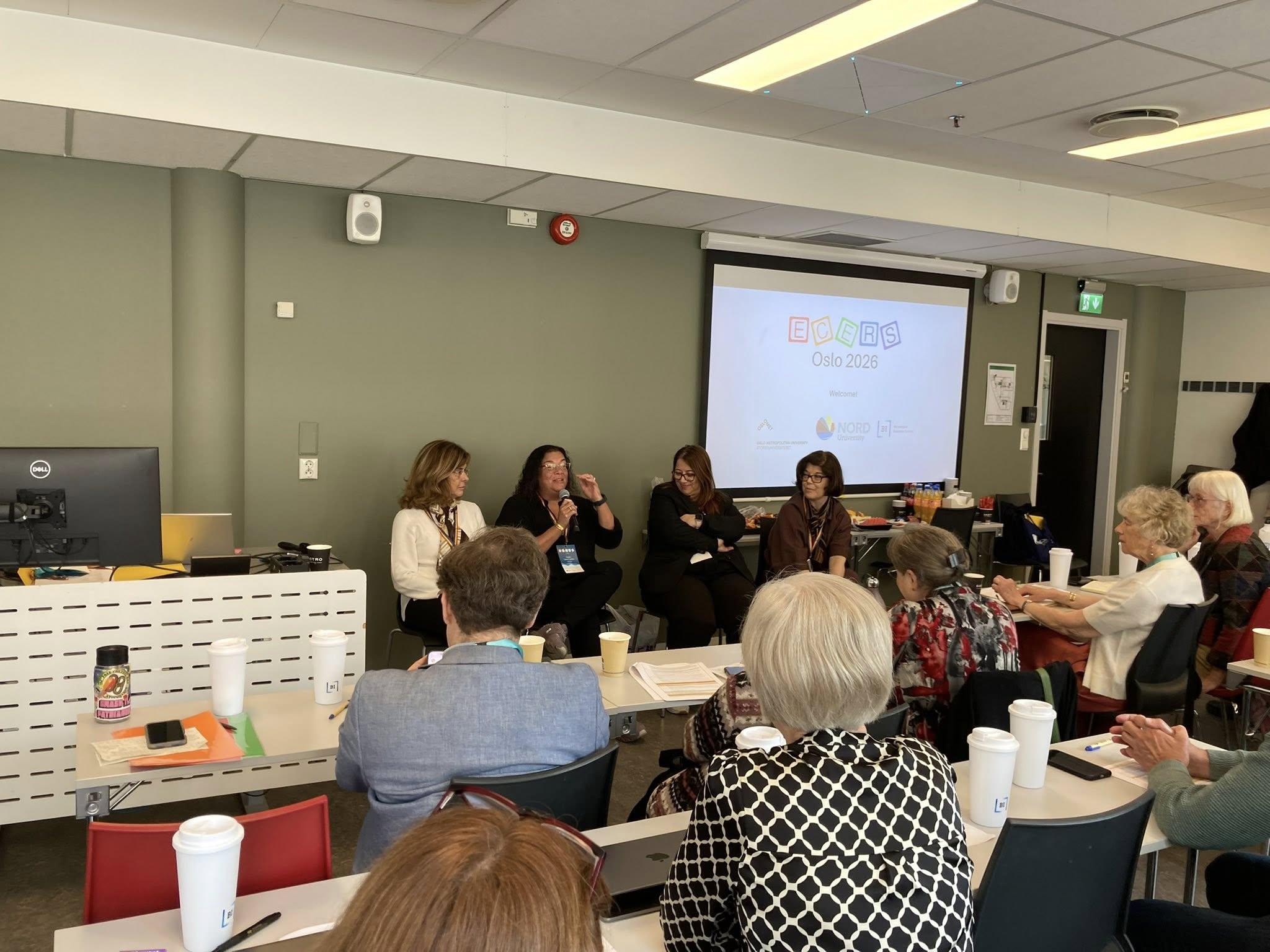
The conference offered both researchers a chance to exchange ideas with colleagues from around the world who are working to understand and improve early childhood classroom quality. For Franco-Jenkins, the meeting created space to explore how observation tools such as the Early Childhood Environment Rating Scale (ECERS) can better reflect the experiences of dual language learners and multilingual learners. Her presentation, “The Importance of Examining Linguistic Interactions of Dual Language Learners: Lessons Learned and Future Implications,” drew on findings from the Language Interaction Snapshot study and emphasized the importance of examining both the quantity and quality of language interactions in early childhood classrooms. “I was excited to discuss the advantages of bilingualism, what the Language Interaction Snapshot study revealed about teacher-child and peer linguistic interactions, and practical strategies for supporting dual language learners and multilingual learners in the classroom,” said Franco-Jenkins. “I also led a discussion on how classroom observation tools might be adapted to better capture the cultural and linguistic needs of these children, with the goal of gathering input that could inform the fourth edition.”
For Yazejian, the gathering was equally valuable as an opportunity to share research and learn how early childhood quality is understood in other countries. A longtime participant in the International ECERS Meeting, she described the conference’s small size as one of its strengths, creating space for meaningful conversations and sustained professional relationships. During an evening seminar open to students, researchers, policy makers, and educators, Yazejian joined a panel on rating scales and their implications for policy and practice, offering historical context on the development and global reach of the Environment Rating Scales. “The session included great discussions with the audience, which included some skeptics about the value of classroom rating tools,” said Yazejian.
Both researchers came away from the meeting with a renewed appreciation for the value of international collaboration in advancing research, policy, and practice. They also emphasized the importance of understanding quality within cultural contexts.
One of the most memorable moments for Franco-Jenkins was visiting an early childhood program centered on preserving the Sámi language and culture. “The Sámi,” said Franco-Jenkins, “are the Indigenous people of Sápmi, a region that stretches across northern Norway, Sweden, Finland, and the Kola Peninsula of Russia. They have their own languages, traditional livelihoods, and a rich cultural heritage.” Seeing how teachers intentionally wove language, stories, and cultural traditions into everyday classroom life underscored the powerful role early childhood settings can play in language revitalization and cultural preservation. The experience also echoed themes in her own work, reinforcing the need for quality measures that are responsive to children’s cultural and linguistic contexts.
A visit to a Norwegian early childhood program also left a strong impression on Yazejian, particularly its connection to the outdoors. Children spent most of the day outside and even napped outdoors, reflecting a philosophy that sees nature as an essential part of daily life and early learning. “It is fascinating to see the differences and similarities in representations of quality and practice based on cultural values,” said Yazejian. “The Norwegians are deeply connected to nature and find joy in the outdoors as an extension of their daily lives, and this philosophy manifests in their policies and practices related to early care and education.”
Together, their experiences in Oslo underscored that early childhood quality is shaped not only by research and measurement, but also by the values, languages, and lived experiences of children and communities. The opportunity afforded by the Thelma Harms award also reinforced for Franco-Jenkins and Yazejian the critical importance of working with and learning from international researchers and practitioners.


