


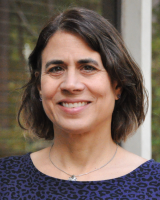

Desiree W. Murray, PhD, is a prevention scientist and licensed clinical psychologist whose research focuses on understanding the development of self-regulation from multidisciplinary perspectives and applying this knowledge to design and test interventions in schools and early care settings for children and adolescents. The primary goal of her work is to promote the well-being of youth, particularly those living in adversity, by creating more supportive home, school, and community environments. A foundational aspect of this work is building the capacity of educators to provide co-regulation supports to students through caring relationships, a supportive school climate, and intentional teacher-student interactions.
Murray is currently FPG’s inaugural Chair of Strategic Research Initiatives. She leads the UPSIDE team at FPG and holds adjunct appointments as a Research Associate Professor in the School of Education and Department of Psychiatry. She is also a Fellow in the Center for Health Promotion and Disease Prevention.
With colleagues at UNC, Murray developed the Be CALM Program that uses mindfulness to build social-emotional capacities in educators and students. Trainings are available to school mental health staff, schools, and districts.
Background
Murray has almost three decades of clinical research experience in school mental health and evidence-based programs for children and youth with attention problems, disruptive behavior, and emotion regulation difficulties, including conducting numerous randomized controlled trials (RCTs). Her work has been supported by over 12 million dollars in federal funding from the Institute of Education Sciences (IES), the Administration for Children and Families (ACF), the National Institute of Mental Health (NIMH), and the National Institute on Drug Abuse (NIDA). She previously served as FPG’s Associate Director of Research from 2014-2018. Prior to that time, she was Associate Professor in the Department of Psychiatry and Behavioral Sciences at Duke Medical Center and Associate Director of the Duke ADHD Program.


