


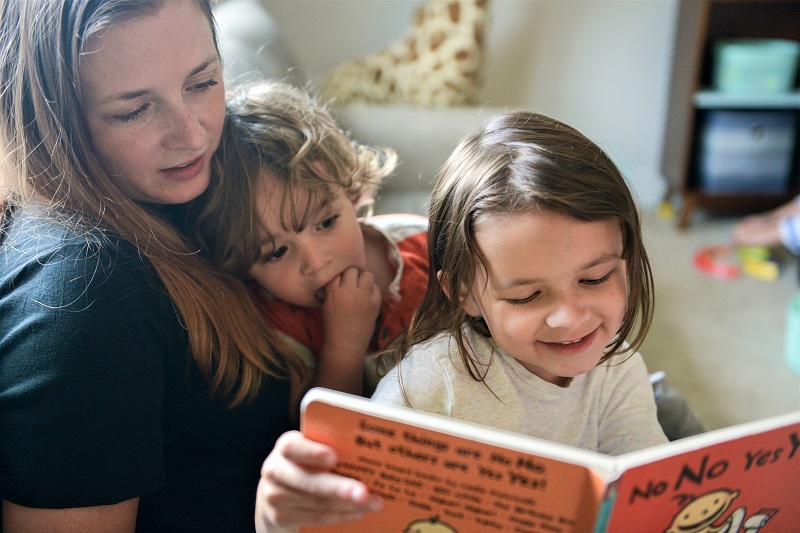
Early intervention and special education programs provide supports and services to children with disabilities so they can develop, learn, and grow to reach their fullest potential. Early intervention focuses on family engagement and includes specialized services such as physical, occupational, or speech therapy for infants and toddlers with developmental delays or disabilities in their natural environments. Special education programs provide therapies and educational services to preschool and school-age children in the least restrictive environment. FPG's work in early intervention and special education is extensive and conducted at every level of the system (i.e., national, state, and local ). Our technical assistance projects include tools, resources, and processes to support system leaders in building the infrastructure necessary to facilitate practitioners’ use of evidence-based practices to improve outcomes for children with disabilities and their families. Projects also provide faculty and professional development providers with strategies for preparing the early childhood workforce to support the learning and development of young children with disabilities.
Featured Person
Sherri Britt Williams, MPH, is a senior technical assistance (TA) specialist working within the Trohanis Technical Assistance (TA) Projects at FPG. She serves as a co-PI and associate director for the ECTA Center, a senior TA specialist with the STEMIE Center, and co-chair of the International Early Childhood Inclusion Institute. In her work, Britt Williams takes a special interest in family engagement, racial equity, emotional and social development in young children, instructional design for adult learners, leadership and team development, and coaching and consulting for professionals; she has presented on those topics across the U.S. to a variety of audiences.
Featured FPG News Story
For young children with disabilities, inclusion begins with belonging—learning, playing, and growing alongside their peers in environments designed to support every child. For decades, FPG has worked with educators, families, and communities to help make that vision a reality, expanding high-quality inclusive opportunities in early childhood settings. That work was on full display in May, when FPG hosted its 26th annual International Early Childhood Inclusion Institute. The annual event brought together more than 300 registrants, presenters, and exhibitors from across the country and around the world, all focused on supporting young children with disabilities, from birth to age 8, in inclusive environments.
Featured Project
Efforts to promote STEM learning in young children have been proven to have significant impacts on important future learning in the areas of science, technology, engineering, and math. The STEM Innovation for Inclusion in Early Education (STEMIE) Center works to promote high-quality inclusion of young children with disabilities in STEM learning opportunities. To accomplish this, the center emphasizes the need to individualize the environment, materials, and instruction based on children’s functioning and needs as opposed to a specific disability.


